How to Treat Lower Back Pain: A Physiotherapist’s Comprehensive Guide
Learn how to treat lower back pain. This guide discusses the causes of low back pain, the available treatment and prevention strategies.

Lower back pain is the most common issue we see at Anytime Physio. Our team are experts in assessing and diagnosing acute and chronic lower back pain, and getting you moving again in the shortest time possible.
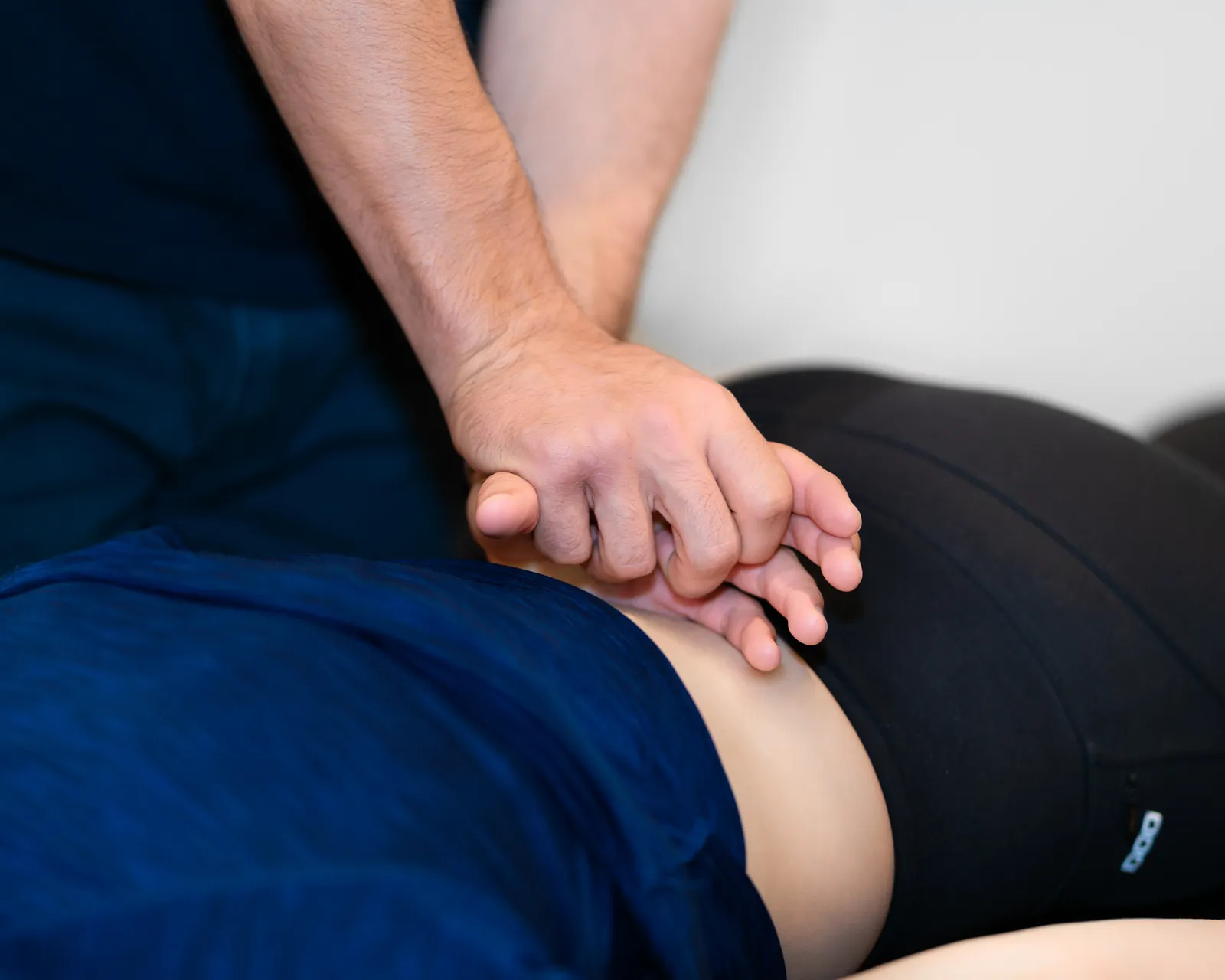
Acute low back pain is usually caused by a strain or sprain of one of the intervertebral discs (most commonly L4/5 or L5/S1), the lumbar facet joints, or the supporting muscles and ligaments. In some cases pain involves irritation of nerve tissue in the lumbar spine: disc herniations or bulges can put pressure on nerves and lead to pain that radiates into the leg (commonly known as sciatica).
Many people with acute low back pain experience a sudden onset after a significant loading event: lifting too much weight with incorrect technique, repetitive lifting, or working in awkward postures. The pain can be so severe that bending, moving and even getting out of a chair becomes difficult.
Chronic low back pain can be caused by many factors: instability of the lumbar spine, reduced muscle strength and support, inflexibility of the muscles around the hips and thighs, and pain sensitisation all play a part. About 80% of people will experience at least one episode of low back pain in their lifetime.
Your physiotherapist will begin by asking about your condition: how the pain started, where it is, any associated numbness, tingling or weakness, and any referral into the legs. We also ask about previous episodes and relevant medical history.
After a thorough history we examine your lower back to determine the cause: posture, movement quality and range of motion, the muscles of the lower back, abdomen and hips, and a manual examination of the joints in the lower back.
Treatment starts with hands-on techniques to relieve your symptoms, typically a combination of massage, joint mobilisations, heat, dry needling and exercises. Your physiotherapist will explain what's driving your pain and walk you through a clear, step-by-step plan for recovery.
Learn how to treat lower back pain. This guide discusses the causes of low back pain, the available treatment and prevention strategies.
There is no one-size-fits-all management of back pain. There is strong evidence that physiotherapy is recommended as the first line of defense against lower back pain, resulting in reduced use of pain medications and less overall health-care expenses.
Neck, Shoulder & Back Pain A Physiotherapist’s Tips to Fix Your Office Work-Related Pain Stiff and sore from hours parked in front of your desk at work? You’re not alone.
Extended hours at Gasworks Plaza, Newstead. Same-day appointments often available.